Banana Embroidery Design: Playful, Polished, and Project-Ready
First Impressions: A Smile You Can Stitch
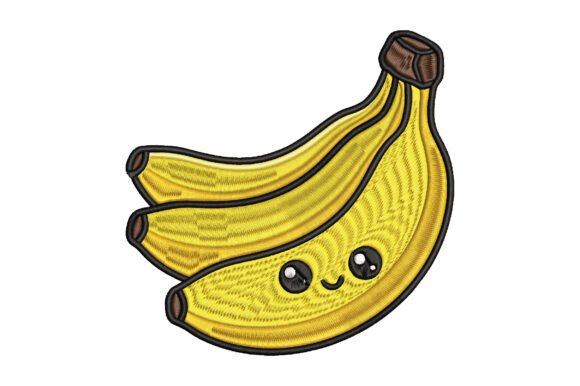
When I opened the Banana Embroidery Design file, what struck me first wasn’t just the cartoon charm—but how intentionally *friendly* it feels. This isn’t a generic fruit silhouette; it’s a bunch of bananas with soft curves, gentle gradients in the satin stitch, and that unmistakable upward curve of a smile built right into the stem. It reads instantly as joyful, approachable, and handmade—not mass-produced or overly digitized. For embroidery designers and craft business owners, that emotional resonance matters: it tells customers, “This was made with care—and maybe a little grin.”
A Real-World Test: Tote Bags That Turn Heads
Last week, I stitched the Banana Embroidery Design onto a natural canvas tote for a local boutique’s summer collection. We used medium-weight cutaway stabilizer, 40-weight polyester thread, and a 5" hoop—just enough room to preserve the design’s rounded proportions without crowding. The result? Crisp satin-stitched banana peels, clean fill-stitch interiors, and zero puckering—even on the slightly textured fabric. Customers didn’t just notice it; they paused, smiled, and asked, “Where’d you get that?” That’s the power of a well-balanced machine embroidery design: it doesn’t shout, but it *connects*.
Where It Shines (and Where to Pause)
The Banana Embroidery Design excels in projects where warmth and whimsy elevate everyday items:
- Custom apparel: Works beautifully on sweatshirt cuffs, t-shirt hems, or baby onesie chest placements—its compact shape avoids bulk while adding personality.
- Embroidered patch potential: Clean outer edges and moderate stitch density mean it’ll hold up well when cut, fused, or sewn onto denim jackets or backpacks.
- Kitchen and nursery decor: On tea towels or pillow covers, the cheerful food theme feels cohesive—not cutesy overkill. Paired with neutral linen or organic cotton, it reads intentional, not cluttered.
- Holiday and gift embroidery: Think Easter baskets, baby shower favors, or “first birthday” aprons—the Banana Embroidery Design adds levity without sacrificing polish.
That said, keep these practical realities in mind:
- Small hoop sizes (under 4"): Some fine details—like the subtle shading in the banana tips—may compress or lose definition. Test first on scrap fabric at your target hoop size.
- Stretchy or thin fabrics: While the stitch density feels moderate (not overly dense), always pair with tear-away or lightweight cutaway stabilizer—especially on knits or rayon blends.
- Dark or textured backgrounds: The design relies on contrast for its expressive lines. On charcoal twill or heavy burlap, consider outlining key shapes with a running stitch or adjusting thread color for clarity.
- Curved surfaces (caps, curved pockets): Its horizontal orientation and even weight distribution make it more cap-friendly than many food-themed designs—but still test on a mock cap before committing to a full run.
What It Adds to Your Finished Product—Beyond the Stitch
As a designer who reviews hundreds of embroidery files a year, I pay close attention to how a design affects perceived value—not just visually, but emotionally and commercially. The Banana Embroidery Design lifts a plain tote from “functional” to “thoughtful.” It turns a custom sweatshirt into a conversation starter. For Etsy sellers and small shop owners, that translates directly to higher engagement, better photo mockups, and stronger brand recognition. Buyers don’t just buy a banana—they buy a mood, a memory, a bit of lighthearted authenticity.
It also supports professionalism in subtle ways: no jagged vector edges bleeding into stitches, no awkwardly spaced elements that suggest rushed digitizing, and no reliance on tiny lettering or micro-details that vanish after washing. That reliability builds trust—especially for handmade product buyers who expect durability alongside charm.
Designer Notes You’ll Actually Use
Before stitching your first Banana Embroidery Design into a client project or shop item, here’s my quick checklist:
- Test on scrap fabric—same type and weight as your final piece—to confirm stitch clarity and stabilizer performance.
- Review thread colors in natural light: yellow-green tones can shift dramatically on screen vs. fabric. Try both warm and cool yellows to see which reads friendliest.
- Check stitch density by zooming into the file preview—look for smooth satin stitch transitions and no overlapping fill areas that could cause buildup.
- Confirm hoop size compatibility with your machine and project layout. This design fits comfortably in a 5"x7", but verify if your version includes alternate sizes.
- Inspect small details like the smile curve and stem texture—do they translate cleanly at 80% scale? That matters for baby embroidery or petite patches.
- Mock it up in black and white to assess contrast and silhouette strength—essential for branding consistency across products.
- Use proper stabilizer: medium cutaway for knits, tear-away for stable wovens, and optional topping for napped fabrics like terrycloth.
- Verify licensing terms before selling finished items or bundling the digital embroidery file—commercial use rights aren’t automatic, even for food-themed designs.
Final Thought: Not Just a Fruit—A Functional Mood Booster
The Banana Embroidery Design stands out because it balances playfulness with precision. It’s not trying to be gourmet or minimalist—it’s confidently, unapologetically cheerful. And in a market crowded with overdesigned or under-digitized files, that clarity of intent is rare. Whether you’re embroidering a one-off personalized gift or scaling up for a craft fair line, this design delivers consistent results, genuine appeal, and quiet professionalism. It reminds us that sometimes, the best design decisions are the ones that make people pause—and smile—before they even touch the fabric.