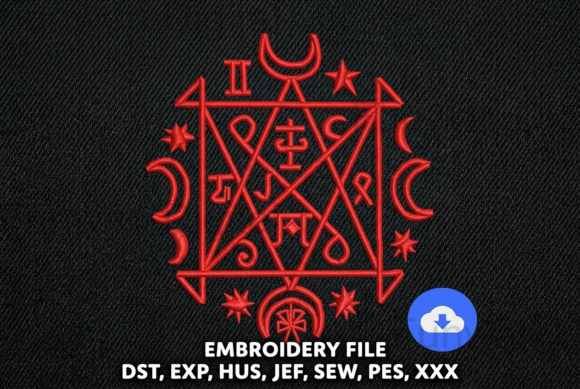
Occult Sigil Machine Embroidery Design
A Designer’s First Look: Dark, Dense, and Deliberate
When I opened the Occult Sigil Machine Embroidery Design, my first impression wasn’t “spooky”—it was structured. This isn’t a playful witchy doodle or a minimalist symbol. It’s a tightly composed, red-dominant sigil built with layered fill stitches that read as both ancient and precise. The layout feels intentional—not sprawling, not cramped—just centered, balanced, and ready to anchor a garment or accessory. As a designer who regularly selects embroidery files for client projects and small-batch production, I immediately saw its natural home: dark denim jackets, heavyweight tote bags, and structured aprons where contrast and clarity matter.
Real-World Use: From Tote Bag to Boutique Shelf
Last week, I tested the Occult Sigil Machine Embroidery Design on a 14-oz black cotton canvas tote for a local boutique’s limited holiday drop. We used medium-weight cutaway stabilizer and 40-weight rayon thread in deep crimson. The result? A bold, tactile seal that held its shape without bleeding or puffing—even after two rounds of machine washing (gentle cycle, cold water). Customers responded strongly: not just to the “dark aesthetic,” but to how crafted it felt—the density gave weight, the symmetry conveyed intention, and the red-on-black created instant visual authority.
It also worked cleanly on a charcoal sweatshirt, though I adjusted tension slightly to prevent thread nesting in the dense center. On lighter fabrics—like a baby onesie or tea towel—I’d hesitate without testing first. The stitch density is high, and the design doesn’t simplify well at under 3.5 inches wide. That said, as an embroidered patch (heat-sealed or sewn on), it shines: clean edges, no fraying, and strong recognition at arm’s length.
Where It Fits—and Where It Doesn’t
The Occult Sigil Machine Embroidery Design belongs on products where mood and craftsmanship align: custom apparel for alternative fashion brands, embroidered patches for pin collectors, pillow covers for moody interiors, and even subtle holiday gifts (think velvet pouches with a single stitched sigil). It’s especially effective for Etsy sellers and small shop owners building a cohesive, story-driven brand—this isn’t background filler; it’s a statement piece.
But it’s not universally flexible. Avoid it on stretchy knits (like ribbed t-shirts) without significant digitizing adjustments—it lacks running-stitch relief or strategic jump stitches to accommodate give. Curved surfaces like caps require re-hooping and careful placement; the top arches can distort if not stabilized with tear-away + topping. And on thin or sheer fabrics? The fill stitch density may show through or cause puckering. If you’re planning baby embroidery or nursery decor, test on scrap first—and consider whether the theme aligns with your audience’s expectations, especially given its placement in the Religion category.
What It Adds to Your Finished Product
This design elevates perceived value. Because it reads as detailed and deliberate—not generic or clip-art-like—it supports higher price points for handmade products and personalized gifts. When customers see the tight satin-stitched borders and consistent fill direction, they subconsciously register skill and care. That builds trust, especially for craft businesses selling digitally previewed items: a clean printable mockup of this sigil on a dark sweatshirt looks premium, not DIY.
That said, it doesn’t blend quietly. It commands attention—so use it where that fits your brand voice. For wedding gifts or neutral-toned kitchen towels? Probably not. But for a gothic-themed café’s staff aprons or a metal band’s merch line? Absolutely. Its strength is in consistency: once you commit to its tone, it reinforces your aesthetic across embroidered patches, tote bag designs, and holiday embroidery collections.
Practical Notes Every Embroiderer Should Check
- Always test on scrap fabric first—especially with dark backgrounds, since red thread can shift hue depending on fabric dye lot and lighting.
- Review stitch density before stitching on delicate or lightweight materials. High-density fill areas need proper stabilizer support to avoid stiffness or distortion.
- Confirm hoop size compatibility. This design likely requires at least a 4x4 hoop; smaller hoops may force compression or clipping.
- Inspect small details in the file viewer: inner loops, fine lines, and intersections. If those vanish or merge when scaled down, it won’t translate well to tiny applications like baby embroidery or cap fronts.
- Test in black-and-white mockups to gauge contrast and legibility—some screens mute red intensity, which affects how buyers visualize the final product.
- Use appropriate stabilizer: cutaway for woven fabrics, tear-away + topping for knits or textured surfaces like denim jackets.
- Verify licensing terms before selling finished items or listing the digital embroidery file. Commercial use isn’t automatic—even for designs marketed as “for craft business.”
Final Thought: A Focused Tool, Not a Trendy Gimmick
The Occult Sigil Machine Embroidery Design isn’t trying to be everything. It’s a focused, mood-driven asset—ideal for designers and makers who understand that symbolism, stitch integrity, and real-world wearability all shape customer perception. It works because it’s designed with purpose: dense enough to hold meaning, balanced enough to scale, and distinct enough to stand apart in a crowded marketplace of generic embroidery files. Whether you’re prepping a batch of custom apparel or curating digital design assets for your Etsy shop, treat it like a signature element—not an afterthought. Test it thoughtfully, place it intentionally, and let its quiet intensity do the rest.