Rose Wreath Embroidery
First Impressions: Grace, Structure, and Quiet Confidence
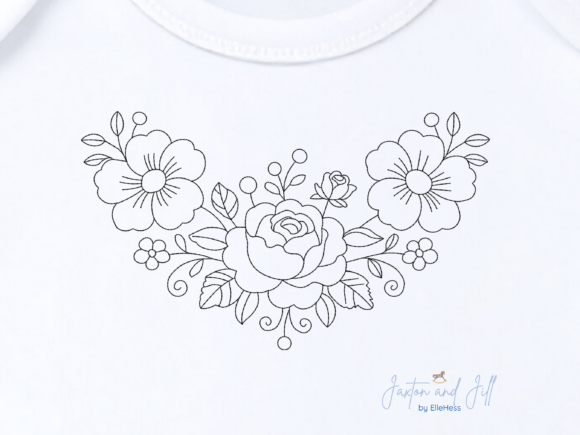
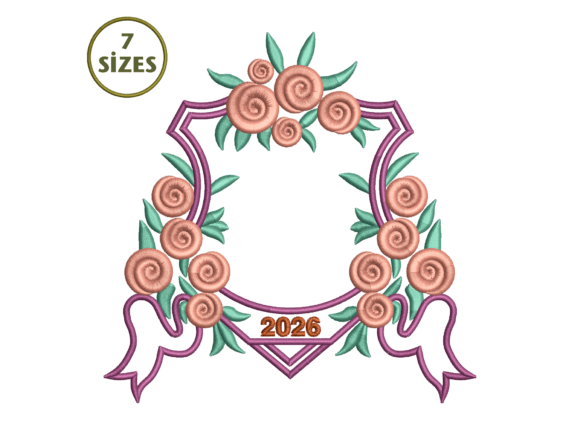
As an embroidery designer who’s tested hundreds of floral wreaths for personalized gift shops, I opened the Rose Wreath Embroidery file with quiet anticipation—and was immediately struck by its balance. This isn’t a fussy, over-layered motif. It’s a composed, shield-shaped monogram frame wrapped in soft, dimensional roses—petals that curl just enough to suggest movement, stems that curve with gentle intention. The mood is elegant but approachable, romantic without being saccharine, classic without feeling dated. It leans into timeless sophistication rather than seasonal trends, making it equally at home on a baby blanket as it does on a wedding keepsake pillow.
Where Rose Wreath Embroidery Truly Shines
This design excels where emotional resonance meets practical customization. Here’s how it performs across real-world product categories:
- Baby embroidery: Stitched on organic cotton swaddle blankets or muslin nursery wall hangings, the rose wreath adds heirloom warmth—especially when paired with a delicate monogram. Parents love how it signals care and intentionality.
- Wedding gift: As a monogrammed towel set, linen napkin, or velvet pillow cover, Rose Wreath Embroidery feels like a quiet vow: refined, lasting, and deeply personal. It avoids cliché while honoring tradition.
- Nursery decor & family keepsakes: On wooden growth charts, framed hoop art, or quilt labels, the shield shape grounds the design—giving it structure and gravitas that smaller florals often lack.
- Everyday handmade products: Think embroidered aprons for bakers, linen tote bags for boutique owners, or kitchen towels for craft fairs. Its balanced proportions scale beautifully from 3” to 6”, and the ornate border frames monograms without overwhelming them.
- Etsy seller advantage: This design stands out in search results under Floral Wreaths and Embroidery because it bridges aesthetics—romantic enough for bridal shoppers, structured enough for modern minimalist buyers.
Where to Use Rose Wreath Embroidery Thoughtfully
Not every surface is ideal—and that’s okay. Knowing the limits helps you protect your reputation and deliver consistent quality:
- Avoid dense textures: Thick terry cloth or heavily napped fleece can obscure fine petal definition. Stick to smooth cotton, linen, lightweight denim, or stable blends for best clarity.
- Steer clear of high-stretch fabrics: Baby onesies or ribbed knit bodysuits aren’t ideal—unless you use cutaway stabilizer *and* test extensively. The shield outline needs stability to hold its shape.
- Dark fabric demands attention: On navy, charcoal, or deep burgundy, confirm thread color contrast *before* stitching. Light pinks or creams may disappear; ivory or antique gold often reads more clearly.
- Curved surfaces need planning: Embroidering this on a curved tote handle or rounded pillow edge requires re-hooping and careful digitizing alignment. Better to place it flat-center on the front panel.
- Frequent-wash items require reinforcement: For embroidered towels or baby blankets, use tear-away + light cutaway stabilizer combo and check stitch density—tight fills may stiffen fabric over time.
How Rose Wreath Embroidery Elevates Your Handmade Product
This isn’t just another machine embroidery design—it’s a trust signal. Customers scrolling Etsy or browsing your local shop instantly read Rose Wreath Embroidery as “thoughtful,” “hand-finished,” and “worth gifting.” That perception lifts perceived value: a $28 towel becomes a $42 keepsake. It also strengthens emotional connection—the shield shape subtly evokes protection and legacy, resonating especially with new parents and newlyweds. In product photography, the design holds up beautifully: clean lines reflect light well, and the monogram space invites personalization without cluttering the frame. Buyers engage longer, ask fewer sizing questions, and leave reviews mentioning “so elegant” and “exactly what I imagined.”
Practical Embroidery Notes You Can’t Skip
Before adding Rose Wreath Embroidery to your production queue, run these checks—every time:
- Test on scrap fabric matching your final product (e.g., waffle weave for towels, interlock knit for baby blankets).
- Verify thread color contrast on both light and dark fabric swatches—not just your screen.
- Confirm hoop size compatibility. Shield shapes often sit wider than tall—ensure your machine’s maximum hoop width accommodates it comfortably.
- Review stitch density in the fill areas—dense rose centers may benefit from reduced density on delicate fabrics to prevent puckering.
- Choose stabilizer intentionally: Tear-away for stable wovens; cutaway for knits or high-wash items; water-soluble topper for looped textures like terry.
- Compare printable mockups with stitched samples—digital previews rarely capture how thread sheen or fabric drape affects the final look.
- Inspect small details post-stitch: Petal tips, stem curves, and monogram spacing should remain crisp—not blurred or flattened.
- Confirm commercial licensing before selling finished products. If the listing says “for personal use only,” it won’t support your small shop product or Etsy store.
Final Thought: A Design That Grows With Your Business
Rose Wreath Embroidery is more than a digital embroidery file—it’s a versatile, emotionally intelligent tool for makers who value both beauty and function. Whether you’re launching your first Etsy shop, expanding your baby product line, or curating wedding gift collections, this design earns repeat use because it adapts without compromising integrity. It doesn’t shout. It invites. And in a crowded handmade market, that quiet confidence is exactly what makes customers pause, personalize, and purchase—again and again.