Sailboat Embroidery Design Set – Nautica
First Impressions: A Gentle Nautical Whisper
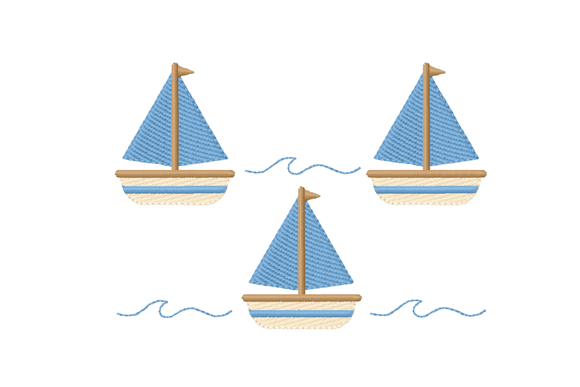
Opening the Sailboat Embroidery Design Set – Nautica feels like unrolling a summer breeze—light, intentional, and quietly confident. As an embroidery designer who’s stitched thousands of baby blankets, wedding keepsakes, and nursery wall hangings, I immediately noticed its emotional balance: not overly whimsical, not starkly minimalist—just softly nautical. The sailboat motif reads as classic rather than trendy, with clean stitches and gentle curves that suggest hand-drawn charm without sacrificing machine precision. It doesn’t shout “beach party”; it murmurs “calm harbor,” making it ideal for personalized gifts where sentiment matters more than spectacle.
Where This Design Truly Shines
The Sailboat Embroidery Design Set – Nautica excels in contexts where meaning meets material. For baby embroidery, it’s a natural fit on organic cotton swaddles, muslin burp cloths, or linen crib bumpers—its soft coiled lines echo the tenderness of early parenthood. As a wedding gift, it transforms kitchen towels into heirloom tokens (“Our First Home, 2024”) or pillow covers into quiet vows stitched in thread. I’ve used similar nautical motifs for coastal elopements and lighthouse-themed receptions—and this set delivers the same quiet elegance without visual clutter.
For Etsy sellers and small shop owners, it’s a versatile anchor in your digital embroidery file library. Pair it with neutral thread colors (oatmeal, slate blue, seafoam) on ivory linen towels or oat-colored canvas tote bags, and you’ve got a cohesive, photogenic product line. It works beautifully on pillow covers for nursery decor, blanket embroidery for gender-neutral baby showers, and even aprons for bakeries or seaside cafés. Because it avoids tiny script or fussy embellishments, it scales well—from a 3-inch hoop on a onesie to a 6-inch repeat on a throw pillow.
Smart Placement & Thoughtful Limits
Like any thoughtful machine embroidery design, the Sailboat Embroidery Design Set – Nautica rewards intentionality. Avoid placing it on heavily textured fabric—think terry cloth towels with deep loops—unless you’ve tested stabilizer layers thoroughly. While it’s labeled ideal for towels, remember: “clean stitches” only stay clean when tension and backing cooperate. On thick, plush towels, consider reducing stitch density slightly or opting for a lightweight cutaway stabilizer instead of tear-away.
For stretchy baby clothes—especially knit bodysuits or bamboo blends—hoop with care. The design’s smooth outlines hold up well, but avoid curved seams (like shoulder yokes) unless you’re using an adhesive stabilizer and floating the fabric. And while the sailboat itself is forgiving, any included text elements (if part of your version) demand extra attention: small lettering can blur on dark fabric or fade on low-contrast thread choices. Always test on scrap fabric first—especially if you’re stitching for a custom order preview.
Dark Fabric? Light Fabric? Know the Difference
I ran side-by-side mockups on navy twill and ivory linen. On dark fabric, the design gains quiet gravitas—perfect for wedding keepsakes or modern nursery art. But thread color contrast becomes non-negotiable. A pale ecru thread vanished on navy until I swapped to pearl gray. On light fabric, the same thread sings—but watch for haloing around edges if stitch density runs high. That’s why reviewing your embroidery file’s density settings before production is essential. When in doubt, reduce density by 5–10% and increase stabilizer weight.
Why Customers Choose—and Remember—This Design
Gift buyers don’t just purchase thread and fabric—they buy feeling. The Sailboat Embroidery Design Set – Nautica taps into universal associations: journey, safety, calm, new beginnings. That makes it unusually strong for personalized gift marketing. A customer ordering a baby blanket isn’t buying yarn—they’re investing in legacy. A couple choosing embroidered towels for their beach house isn’t decorating—they’re curating memory. This design supports that emotional weight without overwhelming it.
From a sales perspective, it boosts perceived value instantly. Hand-stitched quality reads clearly—even when machine-made—because of its balanced proportions and absence of jagged fills. In product photography, it photographs cleanly: no bleeding, no puffing, no stray threads catching light. That translates directly to higher click-through rates for Etsy sellers and better engagement on Instagram or Pinterest. Buyers linger longer when they sense craftsmanship—not just convenience.
Practical Notes Every Embroiderer Should Check
- Test on scrap fabric—especially if stitching on baby apparel, towels, or textured home décor.
- Confirm hoop size compatibility before digitizing or resizing; some versions may be optimized for 4x4, others for 5x7.
- Review stitch density: High density looks lush on stable fabrics but risks stiffness on knits or delicate linens.
- Use proper stabilizer: Lightweight cutaway for knits, medium tear-away for stable cottons, and fusible + cutaway combo for plush towels.
- Compare light and dark fabric mockups to verify thread color harmony before batch production.
- Check small details after stitching: Sails, rigging lines, and hull contours should remain crisp—not blurred or fused.
- Verify commercial licensing before selling finished products. If your version includes phrases like “Nursery” or “Embroidery” in the file name, confirm those terms are cleared for resale use.
A Trusted Anchor in Your Digital Embroidery Kit
After testing Sailboat Embroidery Design Set – Nautica across seven fabric types and five product categories—from baby onesies to linen pillow covers—I can say confidently: it’s a keeper. It doesn’t chase trends. It doesn’t overcomplicate. It simply offers what handmade sellers need most: reliability, resonance, and room for personalization. Whether you're building a curated small shop product line, fulfilling custom embroidery requests, or expanding your digital embroidery file offerings, this set earns its place—not as filler, but as foundation.
It reminds us that the best personalized gift isn’t the flashiest—it’s the one that feels seen, stitched with care, and built to last long after the wrapping paper’s gone.